Teaching Beyond the Walls
Deepening Engagement through Experiential Learning
Experiential learning is a long name for a simple idea. Kids learn by doing real things for real people.
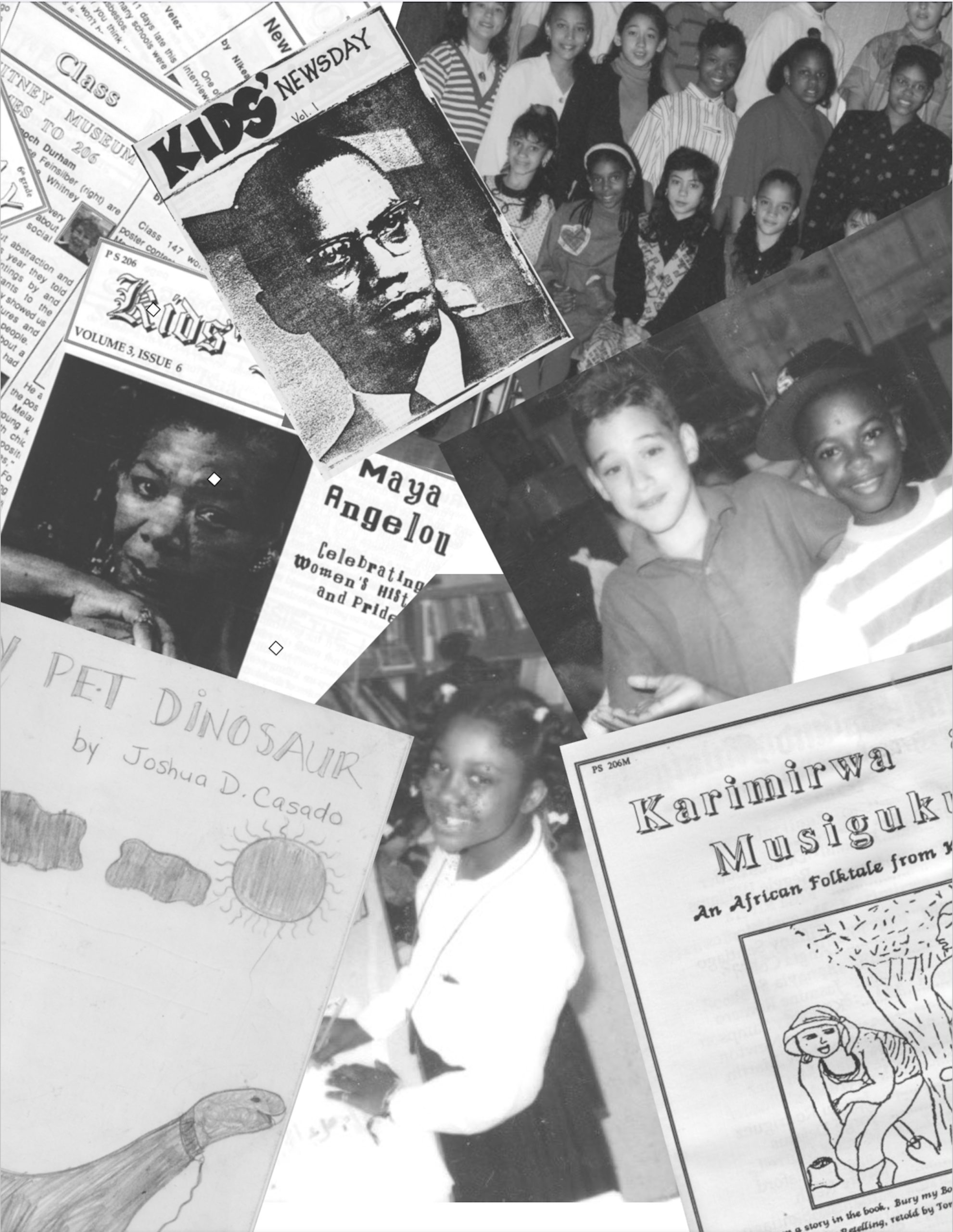
Before HarlemLIVE, I practiced it in a fifth-grade classroom at P.S. 206 in East Harlem. Students wrote letters to real people instead of for a red pen. They staged plays, published a newspaper, brought in guest speakers, and rode the subway all over the city after school.
Then a principal ordered the trips to stop. So I built a program where the trips were the work. That program became HarlemLIVE.
The book tells those stories. This page is the how-to. Each section covers what I did, what I learned, and what it might take in your classroom today.
Roles and Norms
Start with order. Then hand it back.
My first year at P.S. 206, I couldn’t control my class. A veteran teacher showed me how, and for a while I ran a tight ship. Once students knew the structure, I started giving it away.
I tried to create a job for every student. A few of them:
- Class librarians, who checked books in and out and kept the library in order
- Line monitors
- Mailbox organizers, who sorted and delivered papers
- Trash and supply monitors
- The letters club, which tracked outgoing letters and responses
If something in the room needed doing, it could be a job. Rotate them. A job you keep all year becomes a chore.
Systems wear out. Point tickets, traded at auctions every couple of weeks, worked my first year. Homework tables, where students who did their homework sat together, worked for a while. Then they didn’t. Expect that. Change the system before it dies on you.
The best norms come from the students. Kathy Tolan’s sixth graders in Harlem spent the start of the year studying conversation itself, then set their own rules for discussion. “Say something” became a cue for thirty seconds of talk. When a few voices took over, a student asked for quiet so others could speak. Nothing was enforced. Nothing was rewarded.
Try it: In the first two weeks, have students write the rules for one routine: discussion, lining up, or the class library. Post them. Revisit after a month.
After-School Trips

Small groups, usually five or six, rotated so every kid got a turn. Rockefeller Center, the World Trade Center, the Staten Island Ferry, Chinatown, museums, parks. I taught a little history before we went. Afterward, I walked each child home and met the parents, months before parent-teacher conferences.
On the subway, I pretended not to know the route. Students read the map, tracked the stops, and told everyone when to get off.
After a trip to the Statue of Liberty, students wrote about which behavior got kids turned away at the entrance, and what got two pairs of them all the way to the crown. The trip was the lesson. The writing made it stick.
Doing it today. I left the school system over these trips. I’d still run them. But I’d plan for the rules most schools have now:
- Know your school’s trip policy, and get every permission in writing.
- Bring a second adult: a parent, a colleague, a volunteer.
- Keep groups small. Five or six is still the right number.
- Carry every parent’s phone number and a plan for getting each child home.
- Start close. A walk to the library or a nearby park still counts.
The first question to ask a child is: Who are you? A trip answers it faster than a worksheet.
Reading and Writing Workshops
My teaching changed in 1989, when I started training with Lucy Calkins’ Reading and Writing Project at Teachers College. The model is simple: a short mini-lesson, then long blocks of independent and small-group reading and writing.
What I built around it:
- Read-alouds every day, fiction and nonfiction, from Mrs. Frisby and the Rats of NIMH to The Autobiography of Malcolm X.
- A class library big enough that the school librarian borrowed from us. Student librarians ran it.
- Journals, once or twice a day. I wrote in mine while they wrote in theirs. Some days a prompt, some days freewriting.
- Exit slips: a few lines at the end of a lesson about what was hard, what clicked, what was bothering them. At HarlemLIVE, teens’ blog posts did the same job.
- Handmade books, celebrated with publishing parties.
The Reading and Writing Project was dissolved in 2023, mostly over criticism of how it taught early reading. I used it with fifth and sixth graders who could already read. For them, building a love of reading and long, expansive writing worked.
Try it: Write with your students. Ten minutes, same time every day. They notice when the teacher does the assignment too.
Letters and Guest Speakers
Every week, every student wrote two letters to real people. Family, friends, authors, athletes, possible guest speakers. Letters were due Tuesday, came back corrected Wednesday, and went out Friday. I paid the postage out of my own pocket.
I suggested recipients, people I knew in different fields who might interest the kids. Students chose the rest.
The letters did real things. Students wrote City Hall about our treeless, sun-baked building. Months later, the mayor’s office came to our class. The trees still shade the school. Letters also brought authors, museum curators, athletes, and business people into our room.
Eventually students formed a Letters and Speakers Club. They handled the invitations, the scheduling, and the thank-you notes.
Doing it today:
- Use email. It’s free, it’s fast, and replies come back while students still care.
- Keep the weekly rhythm: draft, correct, send. Real recipients still matter more than the medium.
- Use a class email account, never students’ personal ones.
- Keep a log: recipient, date sent, response. Students love watching it fill up.
- Before a speaker visits, students research them and write questions. After, every student writes a thank-you.
- Write local officials about something real: a broken streetlight, a park, a crosswalk. Civics lands when the answer shows up.
- Save paper for when it counts. A handwritten thank-you to a guest speaker gets noticed precisely because almost nobody sends one anymore.
-
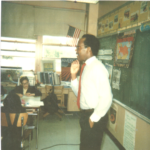
- Dr. Robert Gyles, district math director and a regular visitor
-
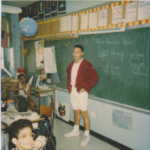
- Guest speaker Darell Martin
-
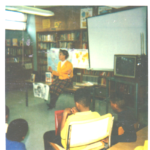
- Children’s author Pat Kibbe, who came after students wrote to her
Folktale Productions
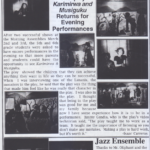
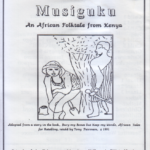
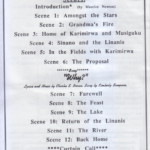
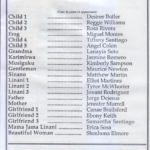
In 1991, my class started turning African folktales into plays. We did one every year after that.
The calendar:
- September: Read tales aloud in reading groups. Every Friday, students take turns reading selections.
- Fall: Vote on a favorite. Study how scripts work. Rewrite the tale with scenes and dialogue.
- Before winter break: Tryouts.
- January: Rehearsals.
- Late February: Performances, timed to Black History Month.
Every student had a job: actors, stage managers, backstage crew, set designers, sound and lighting, publicists, ushers. One student who couldn’t take her acting role became stage manager instead. She still uses those skills as an administrator.
Bring in everyone you can. Our music teacher wrote original songs. A paraprofessional choreographed a dance. The art class and a special education class built the sets. Parents sewed costumes. For the last production, we held evening shows and charged admission to cover costs.
Cast against type. Our first lead was the student who gave the principal the most headaches. Give the hardest kid the biggest job.
Any tradition works. Let students choose stories from their own cultures.

School Newsletters
Our first attempts were rough. I typed the stories and pasted them onto paper, and the layout looked like a ransom note. In 1992, the district gave us a Macintosh Classic, and Kids’ Newsday was born.
What went in: class trips, assemblies, guest speakers, poetry, cartoons, editorials, letters to the editor, and profiles of teachers and students. We sold it for a quarter. Two students walked to local businesses and sold ads.
I moved up to sixth grade with my class to keep the paper going. My former students, now spread across different groups, trained the new ones. The class got good enough to help publish a district technology newsletter and to lead a workshop for teachers at a district conference.
-
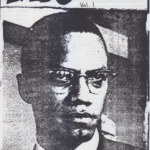
- One of our 1st issues
-
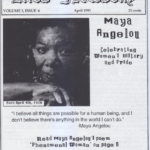
- Front page of another
-
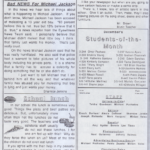
- Editorials. Letters. Staff.
-
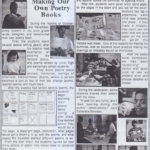
- Class activities
-
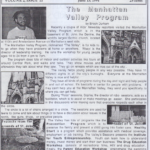
- After school trips
-
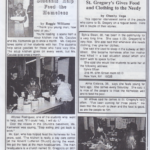
- Community service
-
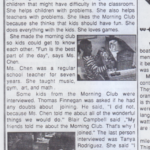
- Morning club
Doing it today:
- The tools are free: a shared doc, a phone camera, a simple layout program or blog.
- Print still matters. A single double-sided sheet that goes home in backpacks gets read.
- Give every job to a student: reporters, photographers, editors, layout, ad sales, distribution.
- Let last year’s staff train this year’s.
- For a model outside school, see our building newsletter guide on the Programs page.